Informazioni su Liquid War — an army that follows your cursor
Liquid War — an army that follows your cursor è un gioco Strategia online e gratuito che funziona direttamente nel browser. Niente da scaricare, nessun account da creare: premi Gioca e sei dentro. Funziona su computer, portatile, tablet e smartphone.
Descrizione del gioco
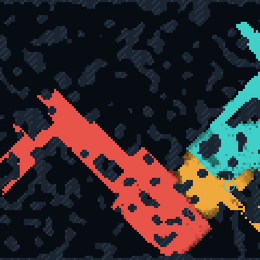
Your army is a few thousand fighters and you command none of them: you move one cursor, and every fighter of your colour floods through the maze along the shortest path to it. When two colours meet nobody dies — the loser changes sides, so the map is a tug of war over one fixed population and every fight you win makes you bigger. Feed a corridor one fighter at a time and you hand it over; pull back until the queue bunches up and arrive all at once, and you take it. Seeded battlefields in six shapes, up to four armies, five opposing temperaments and a twelve-battle ladder that bends one rule at a time.
Come si gioca
Premi il pulsante Gioca per caricare il gioco. La maggior parte dei giochi si controlla con il mouse o toccando lo schermo; i giochi da tastiera usano le frecce, WASD o la barra spaziatrice. Leggi le istruzioni nel gioco per i comandi esatti e usa lo schermo intero per un’esperienza migliore.
Domande frequenti
Liquid War — an army that follows your cursor è gratis?+
Sì. Liquid War — an army that follows your cursor è completamente gratuito e si gioca nel browser. Non devi scaricare nulla né creare un account.
Posso giocare a Liquid War — an army that follows your cursor sullo smartphone?+
Sì. Liquid War — an army that follows your cursor funziona nei browser mobili moderni su iPhone, iPad e Android, oltre che su computer Windows, Mac, Linux e Chromebook.
I miei progressi vengono salvati?+
Punteggi e progressi vengono salvati localmente nel browser di questo dispositivo. Cancellando i dati del browser verranno azzerati.
Chi ha creato Liquid War — an army that follows your cursor?+
Liquid War — an army that follows your cursor è un gioco open source creato da Tobias Müller (GPTGames) e pubblicato con licenza MIT.
Crediti
Creato da Tobias Müller (GPTGames). Open source con licenza MIT. Codice sorgente ↗