Sobre Strata — a falling-sand world you have to discover
Strata — a falling-sand world you have to discover é um jogo de Simulação online e grátis que roda direto no navegador. Não há nada para baixar nem conta para criar: aperte Jogar e pronto. Funciona no computador, notebook, tablet e celular.
Descrição do jogo
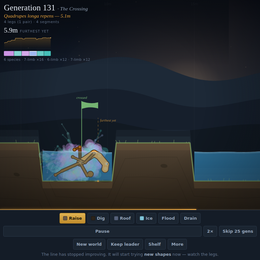
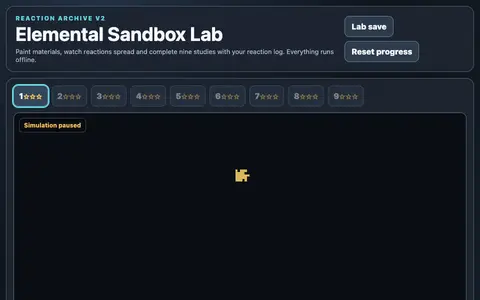
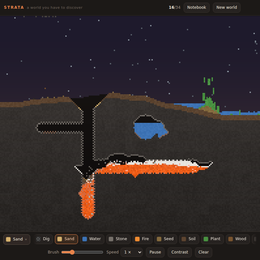
A falling-sand sandbox with no palette. You start with sand, water, stone, fire and a seed; the other twenty-nine materials have to be found. Quench lava to get obsidian, let steam climb until it snows, bury a plant deep under stone and come back to find oil, then coal, then diamond. The ground is opaque until you cut into it, so the salt seams, the ore and the magma at the bottom are yours to dig out. Nothing is discovered for you. Slow the world to an eighth speed to watch a reaction happen, or switch on high-contrast colours to tell the greys apart. Your notebook is kept between worlds.
Como jogar
Aperte o botão Jogar para carregar o jogo. A maioria dos jogos usa o mouse ou toques na tela; jogos de teclado usam as setas, WASD ou a barra de espaço. Veja as instruções dentro do jogo para os controles exatos e use a tela cheia para uma experiência melhor.
Perguntas frequentes
Strata — a falling-sand world you have to discover é grátis?+
Sim. Strata — a falling-sand world you have to discover é totalmente grátis e roda no navegador. Você não precisa baixar nada nem criar uma conta.
Posso jogar Strata — a falling-sand world you have to discover no celular?+
Sim. Strata — a falling-sand world you have to discover funciona nos navegadores modernos de iPhone, iPad e Android, além de computadores Windows, Mac, Linux e Chromebook.
Meu progresso fica salvo?+
Pontuações e progresso ficam salvos localmente no navegador deste dispositivo. Se você limpar os dados do navegador, eles serão apagados.
Quem criou Strata — a falling-sand world you have to discover?+
Strata — a falling-sand world you have to discover é um jogo de código aberto criado por Tobias Müller (GPTGames) e publicado sob a licença MIT.
Créditos
Criado por Tobias Müller (GPTGames). Código aberto sob a licença MIT. Código-fonte ↗